
Summary
Discover the differences between full-sensor and crop-sensor cameras, including image quality, affordability, and shooting capabilities. Make an informed choice based on your needs and style.
If you are shopping for a new camera or learning more about photography, you have probably come across two terms repeatedly: full-frame and crop-sensor. But what do they actually mean? And more importantly:
Does a full-frame camera automatically take better photographs than a crop-sensor camera?
Not necessarily. Sensor size affects field of view, depth of field, low-light performance, camera size, lens selection, and cost—but the best choice depends on what you photograph and how you work.
A crop-sensor camera can be an excellent choice for beginners, travel photographers, wildlife photographers, content creators, and even professionals. Full-frame cameras, meanwhile, can offer advantages for portraiture, low-light photography, landscapes, and situations where greater control over depth of field matters.
Understanding the differences will help you choose equipment based on your photography, rather than assuming a larger sensor is always better.
What Is a Full-Frame Camera?
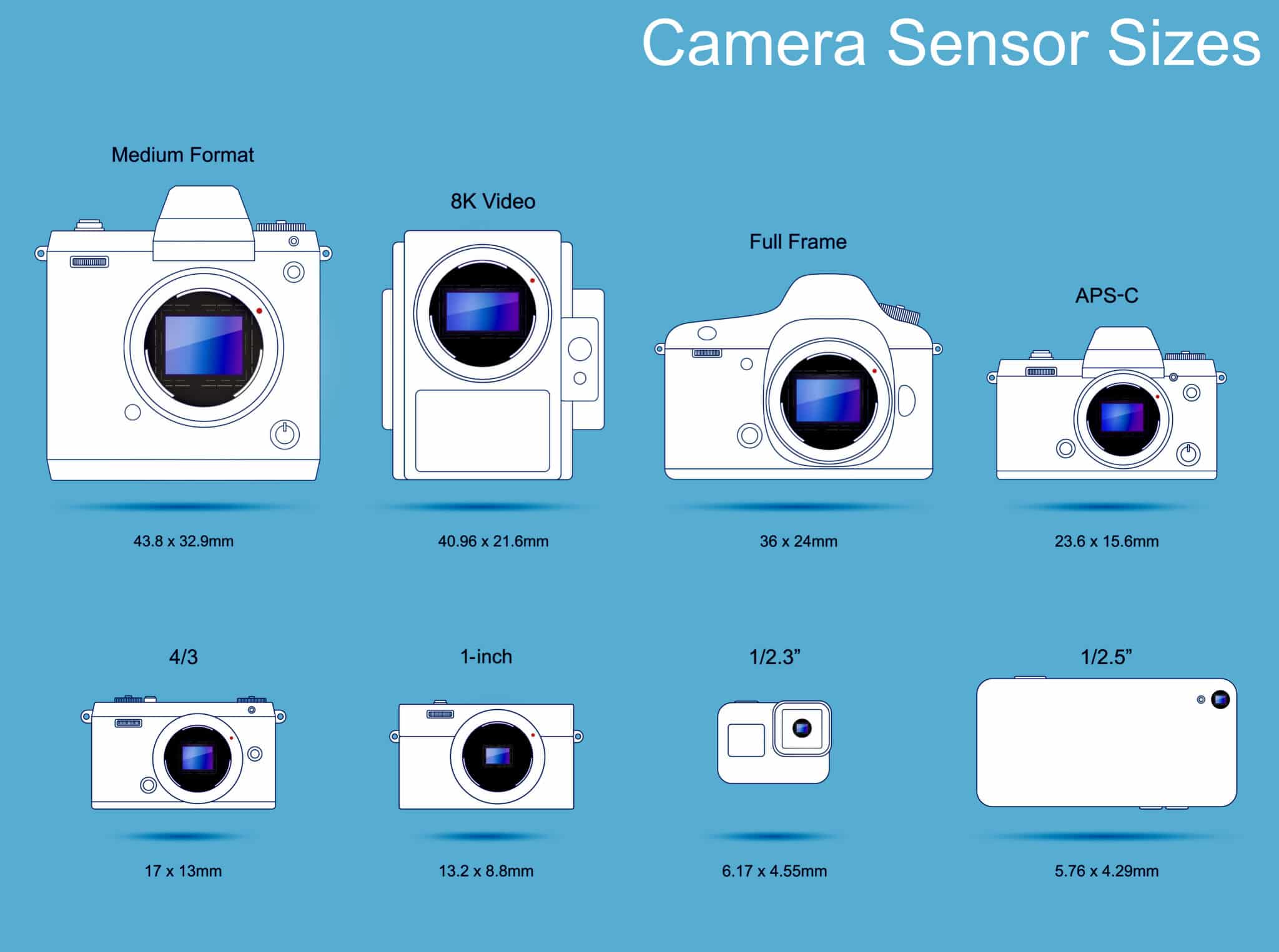
A full-frame camera uses an image sensor measuring about 36 × 24 mm, similar in size to a traditional 35 mm film frame. Nikon calls this format FX, while other manufacturers generally use the term full frame. Nikon
Full-frame sensors are physically larger than the APS-C sensors found in many smaller DSLR and mirrorless cameras. Because of this larger imaging area, full-frame systems can offer several advantages, particularly in low light or when trying to create a shallow depth of field.
But sensor size is only one part of image quality. Lens quality, lighting, exposure, autofocus, processing, photographer technique, and sensor technology all matter too.
What Is a Crop-Sensor Camera?
A crop-sensor camera uses a sensor smaller than a traditional 35 mm full-frame sensor. One of the most common types is APS-C.
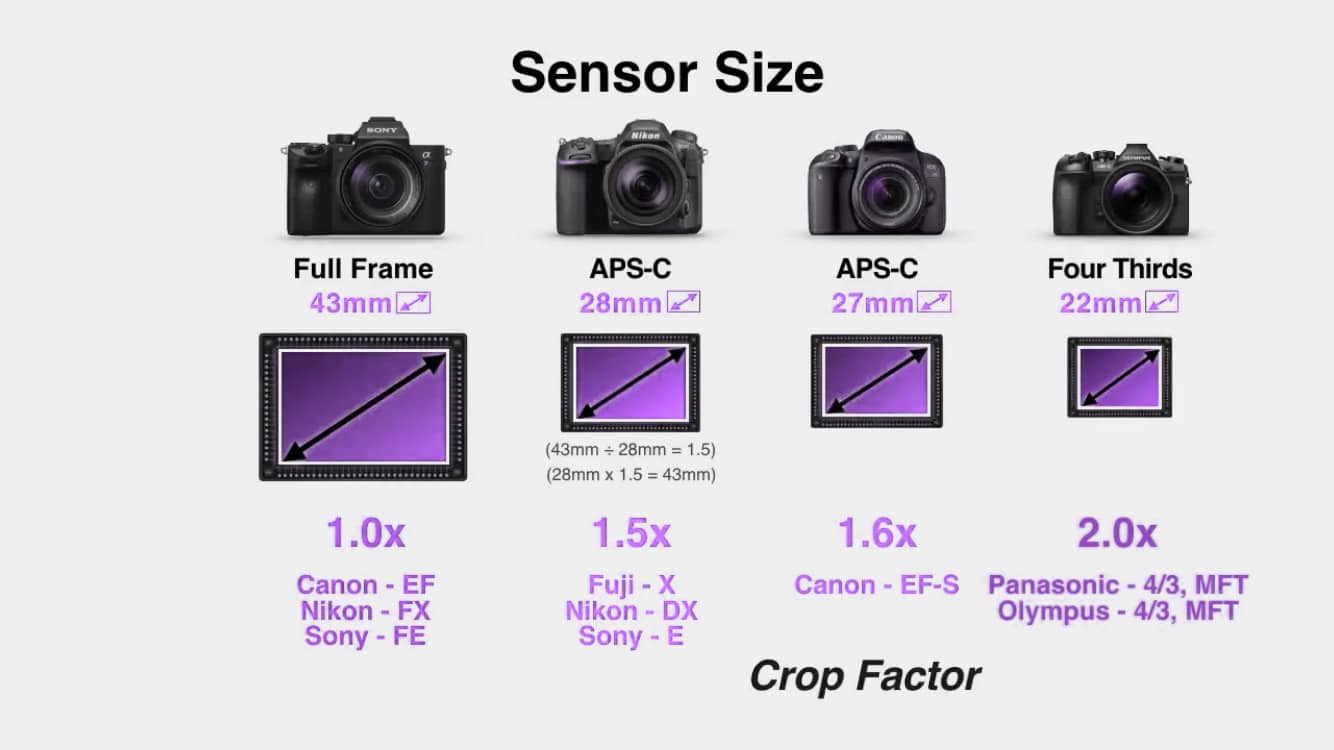
The precise dimensions vary slightly by manufacturer. Nikon’s DX-format APS-C sensor is approximately 24 × 16 mm and has a crop factor of about 1.5×, while Canon APS-C cameras generally use a 1.6× crop factor. Nikon
The word crop doesn’t mean the camera digitally crops the image after you take the photograph. Instead, the smaller sensor records a smaller central portion of the image projected by the lens. That changes the field of view.
Understanding that difference is one of the most important parts of understanding full-frame vs. crop-sensor cameras.
Full Frame vs Crop Sensor: The Main Differences
Here is a simple comparison.
| Feature | Full Frame | APS-C Crop Sensor |
|---|---|---|
| Approximate sensor size | 36 × 24 mm | Around 24 × 16 mm, depending on brand |
| Crop factor | 1× | Usually around 1.5× or 1.6× |
| Field of view | Wider with the same lens | Tighter with the same lens |
| Low-light capability | Often stronger, all else being comparable | Very capable, but typically less total sensor area |
| Shallow depth of field | Easier to achieve at equivalent framing | Greater depth of field at equivalent framing |
| Camera/lens size | Often larger | Can be smaller and lighter |
| Cost | Often more expensive | Often more affordable |
| Wildlife/sports reach | May require longer lenses | Crop factor can be useful |
| Wide-angle work | Easier to achieve | Requires shorter focal lengths for equivalent view |
| Portrait work | Excellent for shallow backgrounds | Also excellent with suitable lenses |
Neither column represents a winner. They are simply different tools.
1. Sensor Size
The most obvious difference is physical sensor size.
A full-frame sensor measures approximately 36 × 24 mm, while APS-C sensors are smaller. Canon notes that its APS-C format is roughly 22 × 15 mm, while Nikon’s DX format is approximately 24 × 16 mm. Canon Canada
A larger sensor provides a larger imaging area. That can influence several aspects of photography, including field of view, noise performance, and depth-of-field options.
However, don’t assume every full-frame camera automatically produces better files than every crop-sensor camera. A new APS-C camera can outperform a much older full-frame model in certain respects. Technology matters.
2. Crop Factor and Field of View
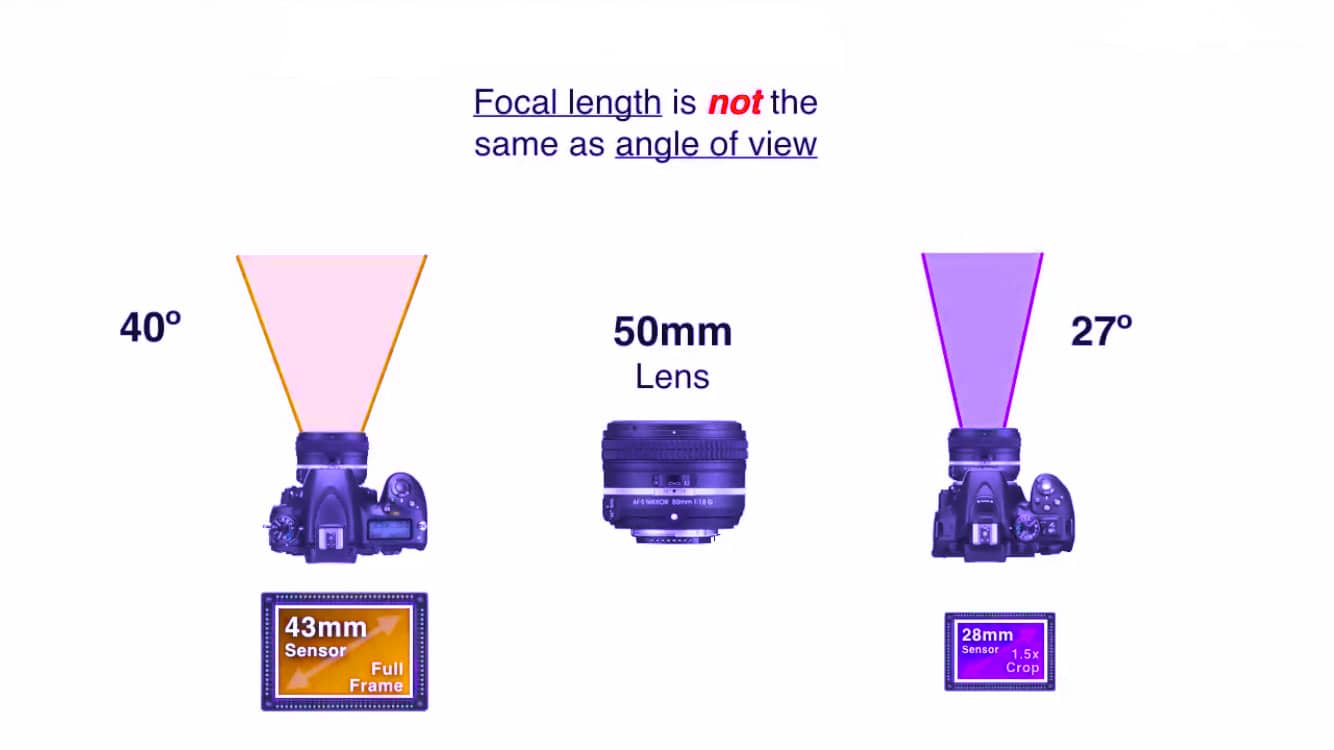
Crop factor is probably the most misunderstood difference between the two formats. Imagine mounting a 50 mm lens on a full-frame camera. On full frame, you get the field of view associated with a 50 mm lens. Place that same 50 mm lens on a Nikon APS-C camera with a 1.5× crop factor, and the field of view looks similar to what a 75 mm lens would show on full frame. The calculation is:
- 50 mm × 1.5 = 75 mm equivalent field of view
- On a Canon APS-C camera with a 1.6× crop factor:
- 50 mm × 1.6 = 80 mm equivalent field of view
The important point is that the lens itself does not become a 75 mm or 80 mm lens. Its physical focal length remains 50 mm.
Only the field of view changes because the smaller sensor records a smaller portion of the lens’s projected image. Nikon specifically explains that crop factor changes how much of the projected image the sensor records; it does not change the lens’s actual focal length. nikon.com.au
3. Does a Crop Sensor Give You More Zoom?
Not technically. A crop sensor doesn’t magnify the image the same way a longer focal-length lens does. Instead, it gives you a tighter field of view. That tighter composition can still be extremely useful.
Wildlife and sports photographers, for example, may appreciate having their subject fill more of the frame when using a telephoto lens. This is why crop-sensor cameras are often described as providing extra reach, even though the lens’s actual focal length has not changed. nikon.com.au
4. Low-Light Performance
Full-frame cameras often have an advantage in low-light photography when comparing cameras of similar generation and technology. Why? The larger sensor provides greater total light-gathering area.
If two sensors have similar megapixel counts, the full-frame sensor may also use larger individual photosites, which can contribute to cleaner high-ISO images and less visible noise. Canon highlights lower digital noise as a typical benefit of full-frame systems. Canon Canada. This can be valuable for:
- Indoor photography
- Wedding and event photography
- Night photography
- Astrophotography
- Low-light portraiture
- Newborn photography using available or relatively low-intensity light
However, the difference is not absolute. Modern APS-C cameras can produce excellent high-ISO results. Exposure, lens aperture, sensor generation, noise reduction, and processing also affect the final image.
5. Depth of Field and Background Blur
One reason portrait photographers often enjoy full-frame cameras is their ability to achieve a shallow depth of field relatively easily. Depth of field refers to how much of the scene appears acceptably sharp in front of and behind the focus point.
When comparing equivalent framing and similar aperture choices, full frame generally makes it easier to achieve a shallower depth of field. This can create the soft background separation often associated with portraits.
Canon also identifies easier background blur and shallower focus as practical advantages of its full-frame systems. Canon Canada
For example, a portrait photographer may want the subject’s eyes perfectly sharp while the background gently falls out of focus. Full frame can make that look easier to achieve. But that does not mean crop sensors cannot create beautiful bokeh.
Use an appropriate focal length, a wide-aperture lens, enough distance between the subject and background, and good technique, and APS-C cameras can produce excellent portrait separation.
6. Is More Depth of Field Sometimes Better?
Absolutely. Shallow depth of field is not always desirable.
For family photography, product photography, macro photography, landscapes, or situations with several people at different distances from the camera, slightly more depth of field can be useful. You often want multiple faces or important details to remain sharp. This is a good example of why full frame should not automatically be considered superior.
A characteristic that helps one photographer may be unnecessary—or even inconvenient—for another.
Full Frame vs Crop Sensor for Portrait Photography
Portrait photographers often choose full frame for its wide lens options, strong low-light performance, and easy background separation. This can be especially attractive for maternity, family, branding, and newborn portraiture. For example, a full-frame portrait setup can make it easier to isolate a subject while keeping the background soft and unobtrusive.
But APS-C is completely capable of professional portrait work. A 50 mm lens on a Canon APS-C body produces a field of view similar to about 80 mm on full frame, which can be quite useful for portraits.
A quality crop-sensor camera paired with good lighting and a suitable lens will often produce a stronger photograph than an expensive full-frame camera used without an understanding of light, posing, and composition. The photographer still matters more than the sensor badge.
Full Frame vs Crop Sensor for Newborn Photography
For newborn photography, full frame can be particularly useful because studio spaces are sometimes limited. The wider field of view available from a given focal length can make composition easier when photographing:
- Newborns on posing bags
- Parents holding their baby
- Sibling portraits
- Family photographs
- Overhead compositions
- Prop setups
Full-frame cameras can also perform very well in softer lighting conditions and provide beautiful subject separation. However, newborn photography does not require full frame.
Safety, posing knowledge, lighting, colour consistency, focus accuracy, and an understanding of newborn behaviour are far more important than sensor format. A camera is simply one component of the workflow.
Full Frame vs Crop Sensor for Wildlife and Sports
This is where APS-C can become particularly appealing. Suppose you are photographing birds with a 400 mm lens. On a Nikon-style 1.5× crop sensor, your composition gives a field of view similar to approximately:
- 400 × 1.5 = 600 mm
- On a Canon 1.6× APS-C system:
- 400 × 1.6 = 640 mm
Again, the lens has not physically become a 600 mm or 640 mm lens. But the tighter field of view lets distant subjects take up more of the captured frame.
That can help with birds, wildlife, aircraft, and outdoor sports. Nikon specifically points to wildlife and sports as situations where crop factor’s tighter framing can be advantageous. nikon.com.au
Full Frame vs Crop Sensor for Landscape Photography
Full frame has traditionally been popular for landscapes because it makes wide fields of view easier to achieve. Using the same lens, a full-frame sensor captures a wider view than an APS-C sensor. For example, a 24 mm lens behaves as a true 24 mm field of view on full frame.
On Nikon APS-C: 24 mm × 1.5 = 36 mm equivalent
On Canon APS-C: 24 mm × 1.6 = 38.4 mm equivalent
That means an APS-C landscape photographer generally needs a shorter focal-length lens to achieve the same wide composition. Canon specifically notes the full-frame advantage for wide-angle landscape and architectural work. Canon Canada
That said, excellent ultra-wide APS-C lenses exist, so crop-sensor photographers are certainly not excluded from landscape photography.
Camera Size and Weight
Crop-sensor systems can often be smaller and lighter. The sensor is smaller, and manufacturers can design lenses specifically around the smaller image circle. Nikon, for example, notes that its DX format allows smaller, lighter camera and lens designs. Nikon
That can make APS-C appealing for:
- Travel
- Street photography
- Hiking
- Everyday family photography
- Content creation
- Long photography sessions
A full-frame body may not feel particularly heavy on its own, but once you add professional wide-aperture lenses, the entire system can become substantially larger. The best camera is not particularly useful if you stop carrying it because the kit is too heavy.
Price: Is Full Frame More Expensive?
Historically, full-frame cameras and lenses have generally occupied higher price categories than APS-C systems. That difference has narrowed as camera lineups have expanded, but APS-C still often provides an excellent way to build a capable system without immediately investing in large professional lenses.
When comparing costs, look beyond the camera body. Think about the full system:
- Camera body
- Lenses
- Additional batteries
- Memory cards
- Flash equipment
- Filters
- Tripod
- Camera bag
- Backup body if working professionally
A less expensive camera paired with better lenses may be a smarter investment than putting most of your budget into the body.
Lens Compatibility Matters
This is an important part of choosing between formats. Many camera systems allow full-frame lenses to work on APS-C bodies. Because the crop sensor records only the central portion of the lens’s larger image circle, the full-frame lens works normally while still producing the APS-C crop factor.
Going the other way can be different. An APS-C lens is designed around a smaller image circle. Some full-frame cameras automatically enter a crop mode when you attach an APS-C lens, using only part of the full-frame sensor. Nikon, for example, explains that FX cameras can switch into DX crop mode with DX-format lenses. Nikon
This is worth considering if you expect to upgrade from APS-C to full frame later. Buying compatible full-frame lenses while using a crop body can sometimes make the transition easier, although those lenses may be larger and more expensive.
Does Full Frame Have More Megapixels?
Not necessarily. Sensor size and megapixel count are separate specifications. A crop-sensor camera can have more megapixels than a particular full-frame camera.
Likewise, a full-frame camera designed for high-resolution commercial photography may have far more megapixels than another full-frame model optimized for speed or low-light performance. More megapixels can help with:
- Large prints
- Commercial work
- Detailed landscapes
- Cropping flexibility
But higher resolution also creates larger files and demands more from lenses, storage, computers, and editing workflows. Do not choose a camera based on megapixels alone.
Which Sensor Is Better for Beginners?
For many beginners, APS-C is an excellent place to start. It can offer:
- Lower overall system cost
- Smaller equipment
- Excellent image quality
- Good lens options
- Useful telephoto framing
- Enough performance to learn exposure, lighting, composition, posing, and editing
Most beginning photographers will improve their photography far more by learning how to use light and their existing camera than by moving to full frame immediately. If you already know that your work requires specific full-frame advantages, however, starting with full frame may make financial sense rather than buying two complete systems over time.
Should a Professional Photographer Use Full Frame?
Professional does not automatically mean full frame. A professional photographer needs equipment that reliably meets the job’s needs. That could be:
- APS-C
- Full frame
- Medium format
- Micro Four Thirds
- Or a combination of systems.
- The correct choice depends on what the photographer creates.
A wildlife photographer may value pixel density and crop factor. A commercial studio photographer may prioritize resolution. A newborn or portrait photographer may value low-light performance, autofocus, colour, and shallow depth-of-field control. A travel photographer may care most about size and weight.
Professional photography is defined by the work and the photographer—not simply the size of the camera sensor.
Full Frame vs Crop Sensor: Which Should You Buy?
Choose a full-frame camera if you value wider fields of view, strong low-light performance, easy control over shallow depth of field, and access to a system designed around professional portrait, event, landscape, or commercial work.
Choose an APS-C camera if you value portability, affordability, tighter telephoto framing, or simply want a highly capable camera system without the weight and expense that often accompany full-frame equipment.
Most importantly, choose based on what you actually photograph. Do not upgrade because the internet says you have “outgrown” a crop sensor. Upgrade when your current equipment is genuinely limiting the photographs you want to create.
Frequently Asked Questions About Full Frame vs Crop Sensor Cameras
Is full frame better than crop sensor?
Full frame has certain technical advantages, particularly for low-light photography, wide-angle work, and shallow depth-of-field control. However, crop-sensor cameras can produce professional-quality images and may suit photographers who value portability, affordability, or tighter telephoto framing.
What does a 1.5× crop factor mean?
A 1.5× crop factor means the camera’s sensor records a smaller portion of the image projected by the lens than a full-frame sensor. A 50 mm lens therefore gives a field of view similar to approximately 75 mm on full frame. The actual lens focal length remains
50 mm. nikon.com.au
What does Canon’s 1.6× crop factor mean?
A 50 mm lens on a Canon APS-C body provides a field of view similar to approximately 80 mm on a full-frame camera. Canon confirms the 1.6× crop relationship for its APS-C format. Canon Canada
Is full frame better for portraits?
Full frame can make shallow depth of field and background separation easier to achieve at equivalent framing, which many portrait photographers enjoy. Crop-sensor cameras can still produce excellent portraits with an appropriate lens and technique.
Is a crop sensor good for professional photography?
Yes. Sensor size does not determine whether a photographer or photograph is professional. Modern APS-C cameras are used for portrait, wildlife, sports, travel, video, and many other professional applications.
Does crop factor increase focal length?
No. The lens’s actual focal length does not change. Crop factor changes the recorded field of view because the smaller sensor captures a smaller central portion of the image circle. nikon.com.au
The Most Important Difference Is How You Use the Camera
The full-frame vs crop-sensor debate can easily become too focused on specifications. Sensor size matters. But photography is still about much more than equipment.
- Understanding light.
- Choosing the correct lens.
- Creating a strong composition.
- Directing or posing your subject.
- Selecting your camera settings intentionally.
- Focusing accurately.
- Recognizing the right moment.
Those skills follow you from one camera to another. A more expensive camera can expand what is technically possible, but it cannot replace photographic knowledge. The best camera system is the one that gives you the tools you need without getting in the way of the photographs you want to create.
Photography in Windsor, Ontario
At MB Graphic & Photography Design, I specialize in newborn photography and also photograph maternity, Milestone & Baby Plan, and family sessions in Windsor, Ontario and the surrounding area.
Understanding my camera equipment is an important part of creating consistent professional photographs, but equipment is only one part of the experience. Lighting, posing, newborn safety, preparation, connection, and thoughtful editing all contribute to the final portrait.
My goal is to create clean, timeless images and meaningful printed artwork that allow families to preserve the stages that matter most.
Bridging Creativity with Memories.
Links:
Photography Portfolio
Newborn Photography
Photography Articles